🥚How to Cook Eggs in Stainless Steel Without Sticking (The Real Method)
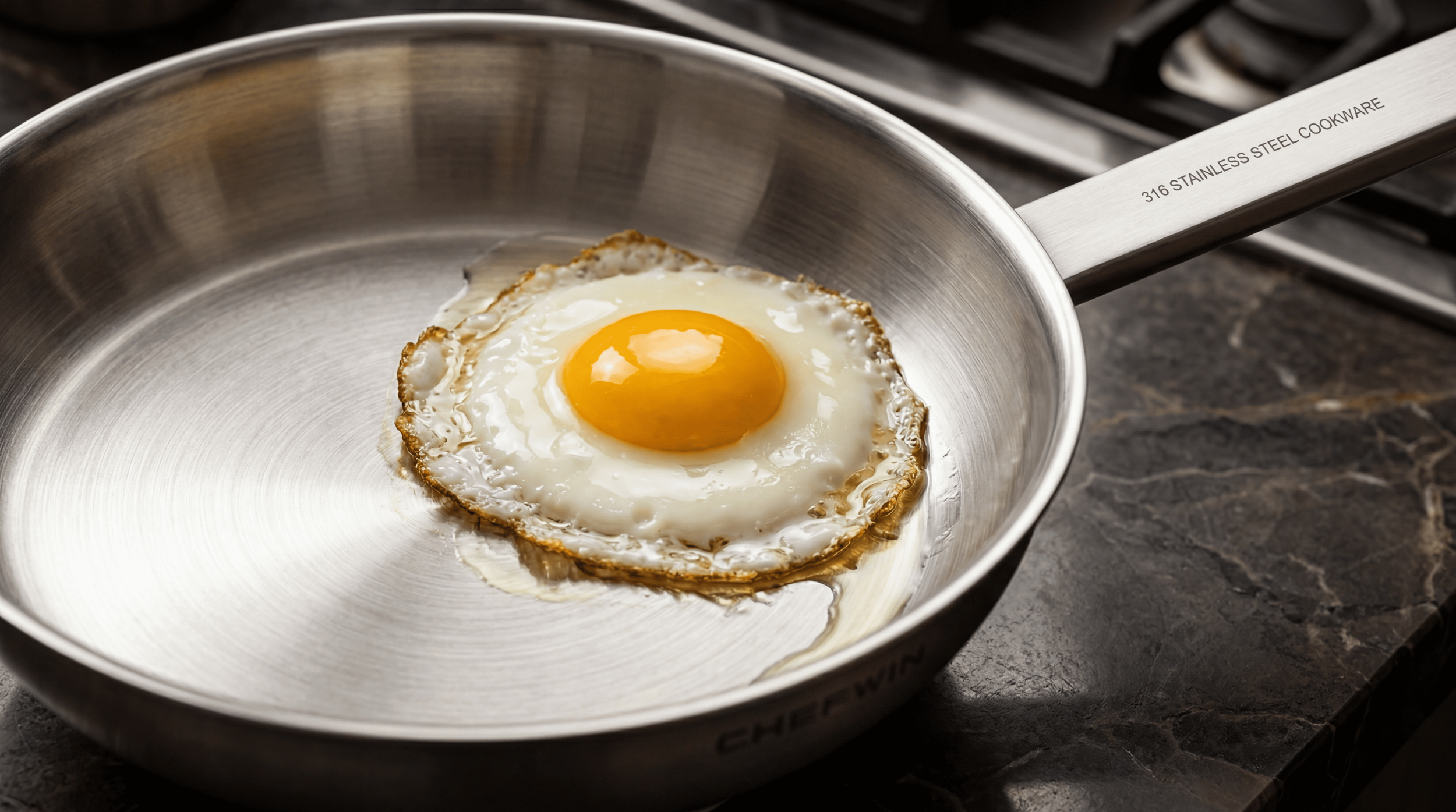
Here's the single most searched cookware question in America: "How do I cook eggs in stainless steel without them sticking?"
The answer isn't complicated. But 95% of people making stainless eggs are making the same mistake — and they never realize it's technique, not the pan. 🥚
1. Why Eggs Stick (The Real Reason)
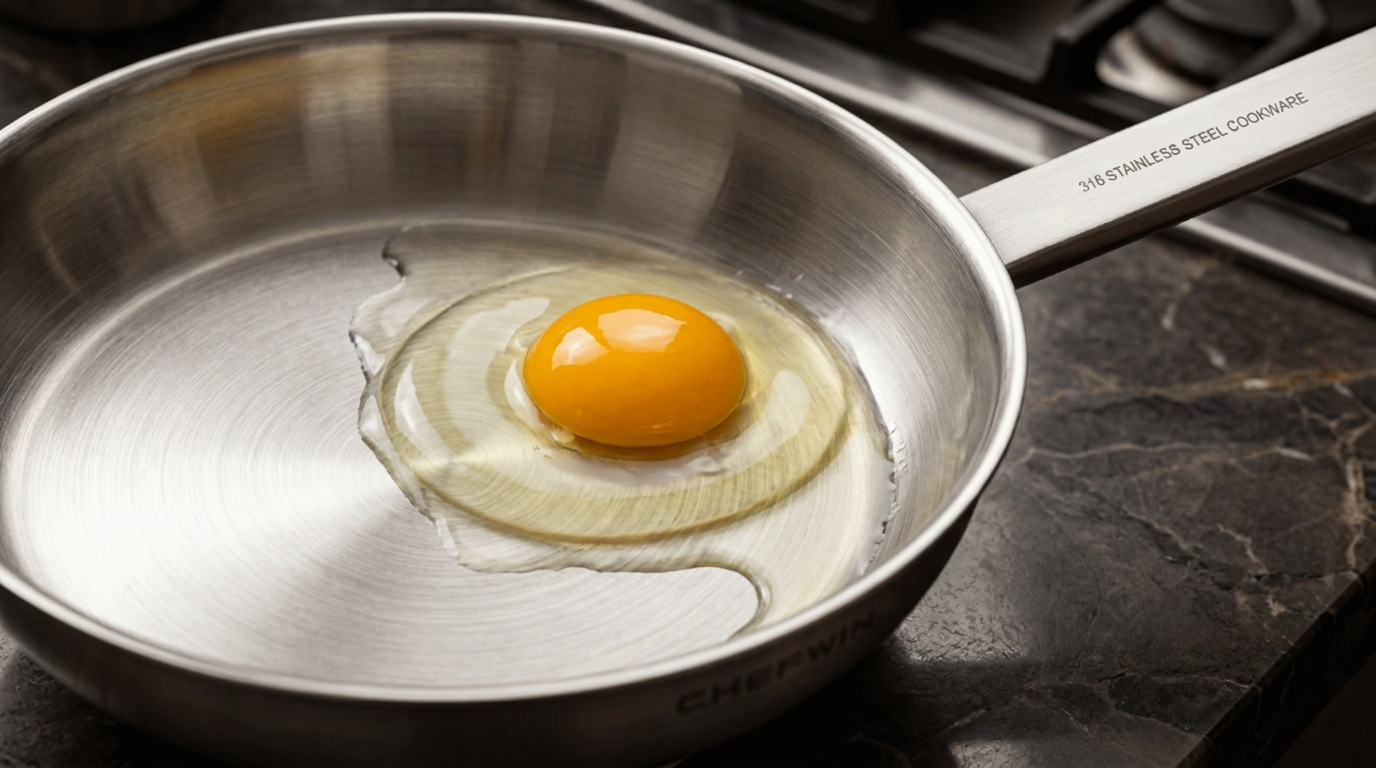
Eggs stick to stainless steel for exactly one reason: the pan is the wrong temperature when you add the egg.
Egg proteins begin bonding to metal surfaces at the molecular level the moment they hit a surface below ~325°F. When your pan isn't hot enough, proteins grip the metal before the bottom layer has time to set and release.
The solution: the Leidenfrost effect. At ~350°F, a vapor barrier forms between the egg and the pan. Food doesn't touch the metal — it hovers on steam.
2. The Exact Method — Step by Step 🔥
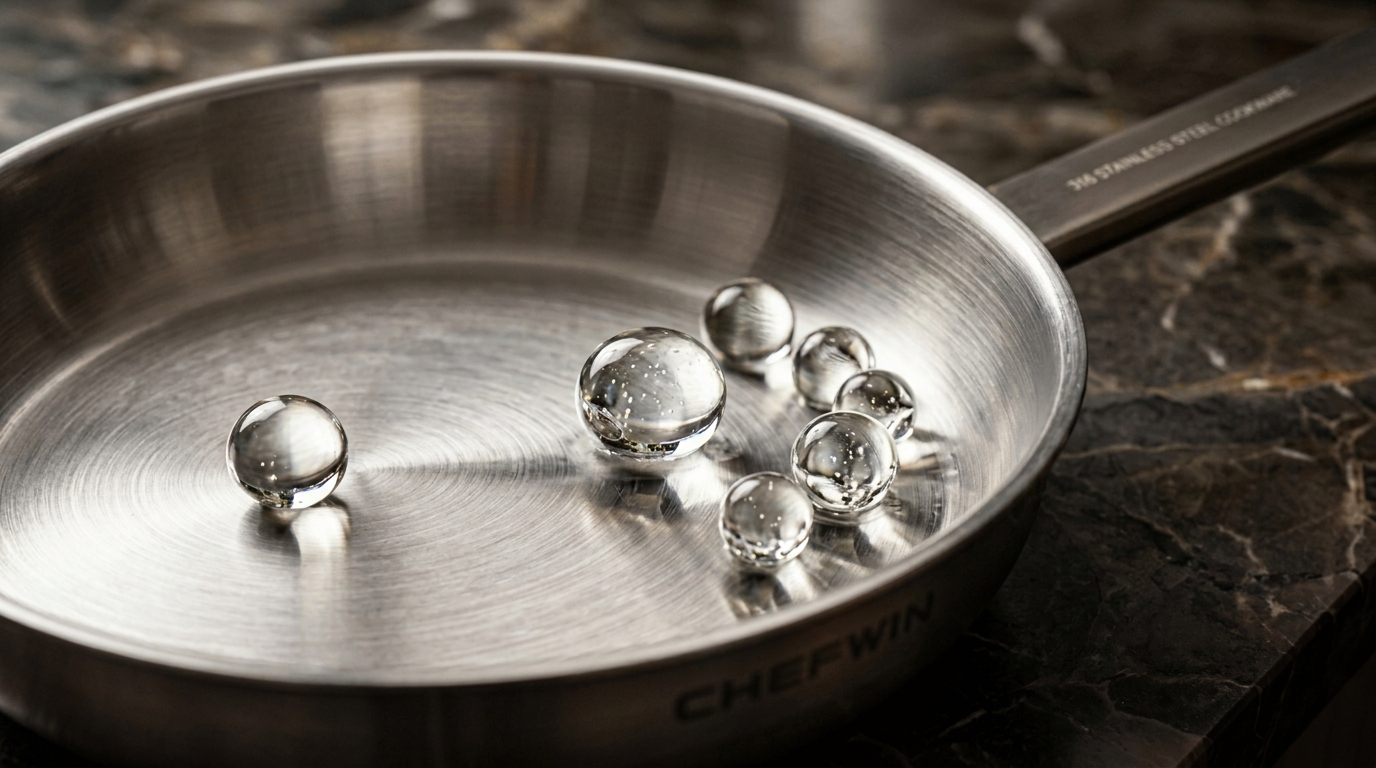
Step 1: The Leidenfrost Test
Heat your empty pan over medium heat 2–3 minutes. Flick 3–4 water drops in.
Too Cold: Drops sizzle and vanish.
Perfect (~350°F): Drops form beads that glide like a puck on ice. This is the "Mercury Ball" effect.
Too Hot: Drops scatter into tiny micro-droplets.
You want the dancing beads. Every time.
Step 2: Add Fat, Reduce Heat
Add 1 tablespoon of high smoke point oil (avocado/greeseseed) or cold butter
Crucial Step: Reduce heat to medium-low. The egg cooks in the retained heat of the pan.
Step 3: Add Egg, Don't Touch
Crack the egg into the pan. Do not move it. It will release naturally in 2–3 minutes. If you pull too early, it tears.
3. Beyond Fried Eggs: Scrambled & Omelettes 🍳
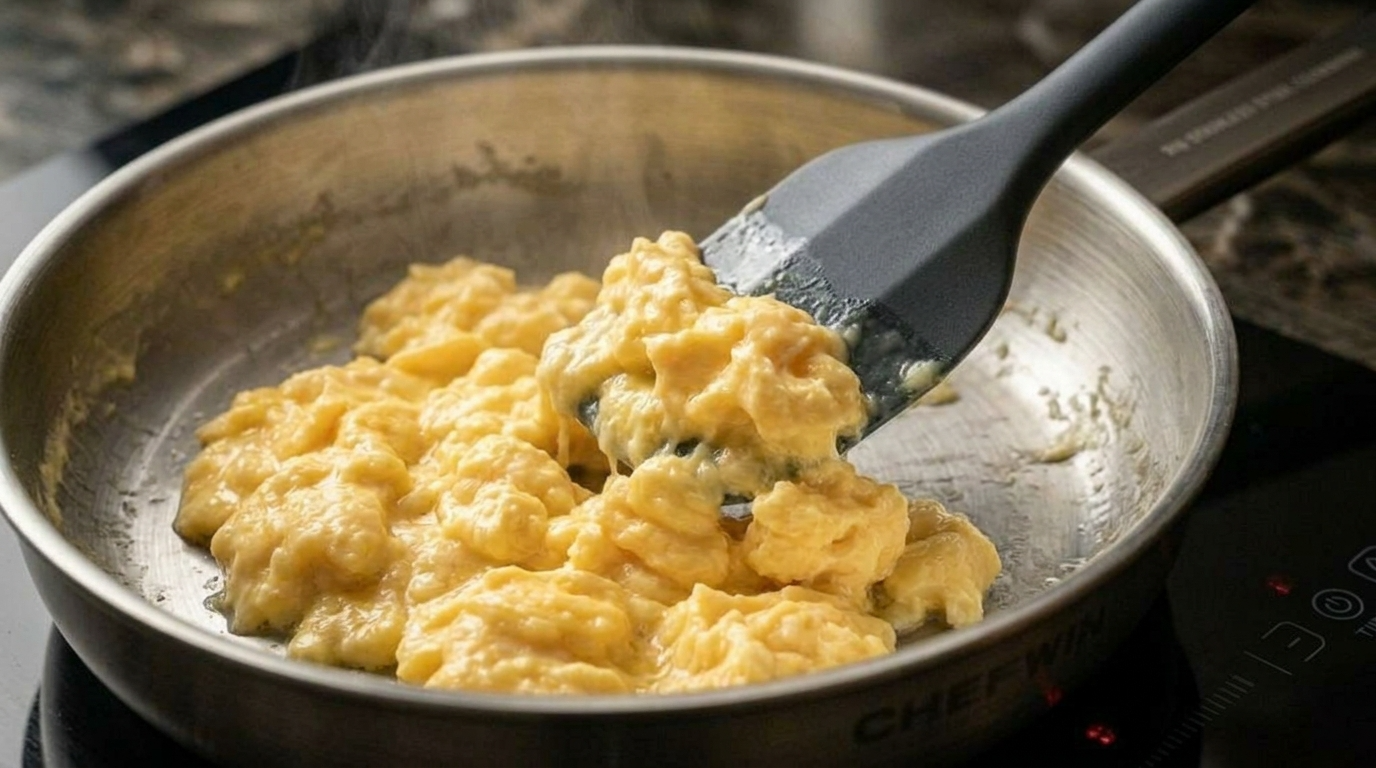
The Silky Scramble :
The secret is "Slow and Low." High heat leads to rubber, but patience leads to silk.
Perform the Leidenfrost test, then reduce to low heat.
Add 1.5 tbsp of butter and let it foam. Pour in beaten eggs (add a splash of cream for extra silkiness).
Gently fold from the edges. Remove from heat when 80% set—residual heat finishes the job.
The Advanced French Omelette :
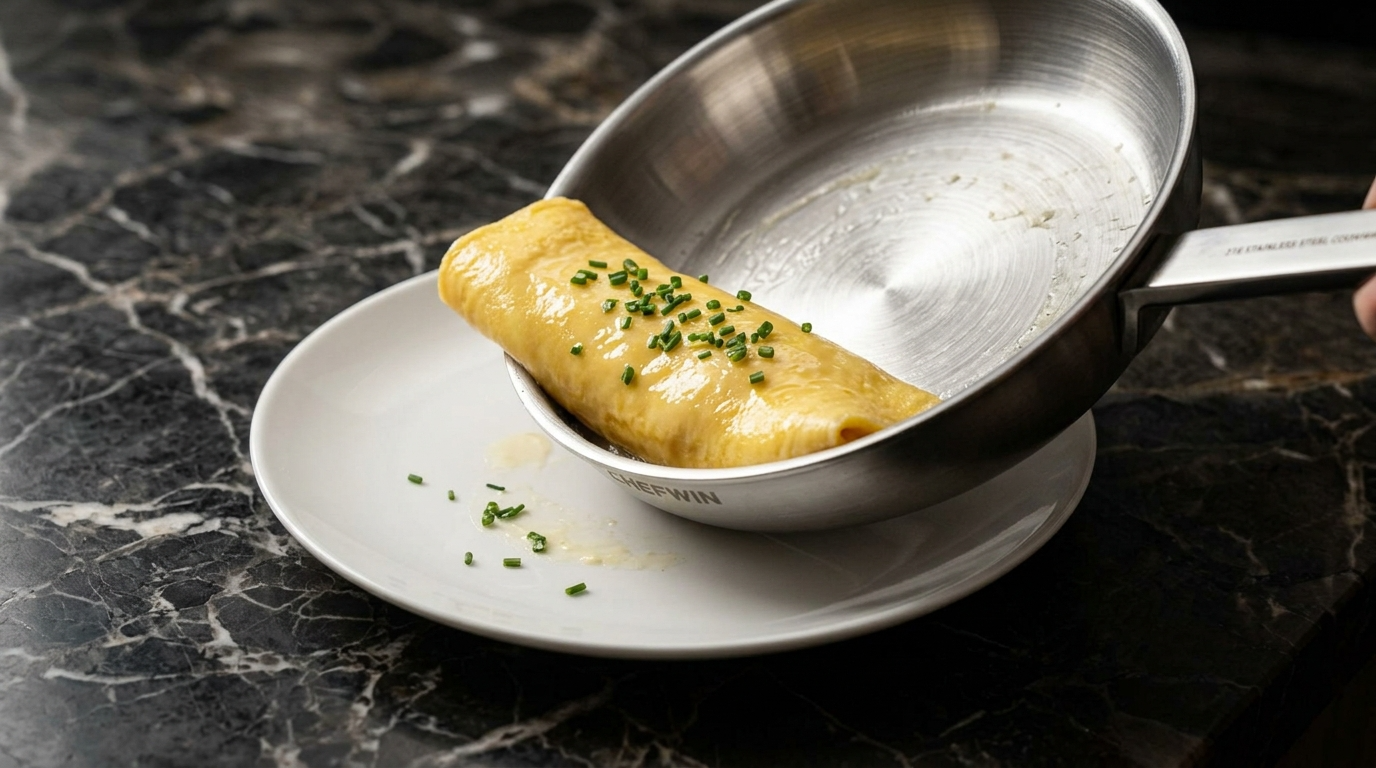
Professional French omelettes are traditionally made on stainless steel.
Leidenfrost test, then reduce to medium.
Use 2 tablespoons of butter. Shake the pan continuously while stirring the center gently.
When the surface is barely set but still "wet," add filling, fold, and roll onto the plate.
Why Chefwin? The Engineering Behind the Difference
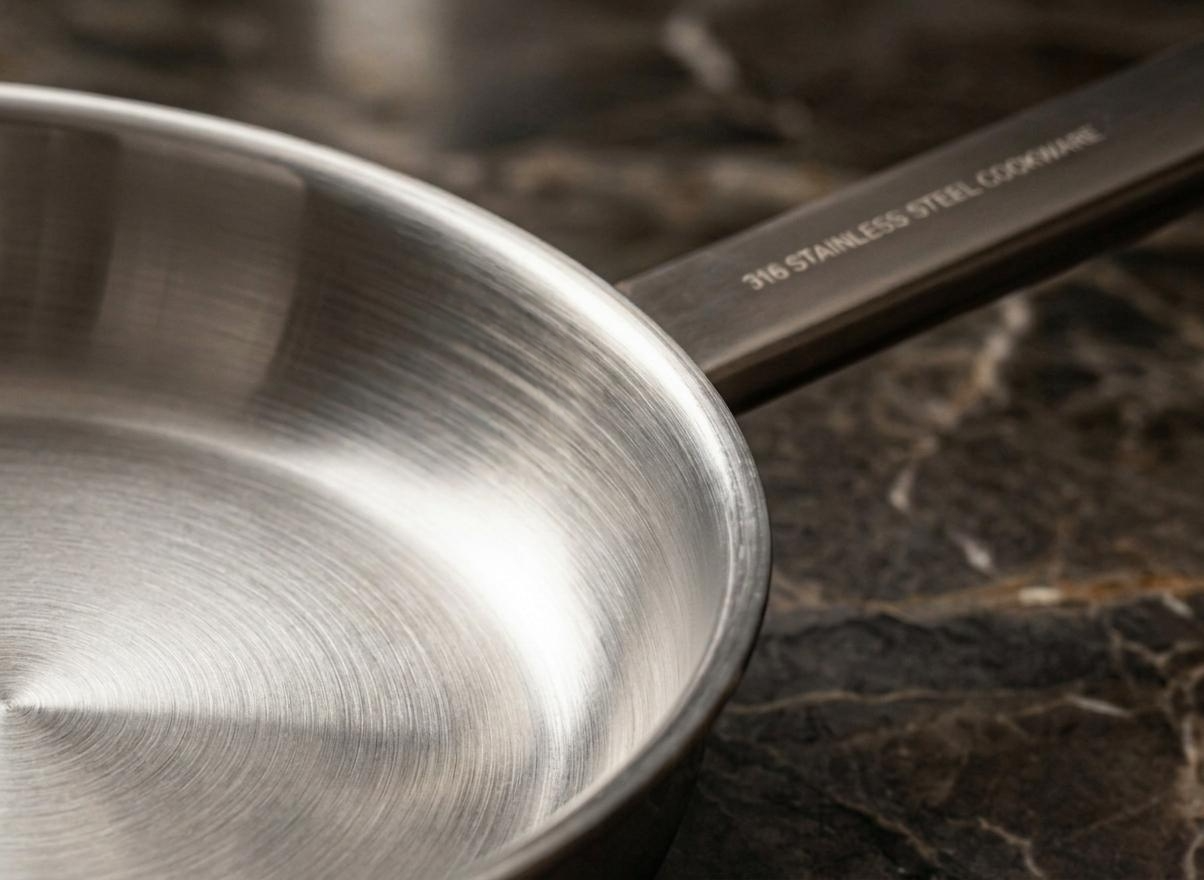
🔬 316 Stainless Steel — Surgical-grade alloy with molybdenum. Resists acids (wine, tomato, citrus) and delivers pure flavor with zero metallic interaction.
🔩 Rivet-less Seamless Handle — Welded directly to the pan body. No crevices, no grease traps, completely hygienic every wash.
🥞 5-Ply Full-Clad Construction — Five bonded metal layers from base through sidewalls. Even heat everywhere — no hot spots, ever.
🛡️ FDA-Grade, PFAS-Free — Zero PTFE, zero PFAS, zero coatings. The safest cooking surface available.
🥚 Chefwin's 5-ply even heat makes the Leidenfrost temperature easier to reach and hold consistently.
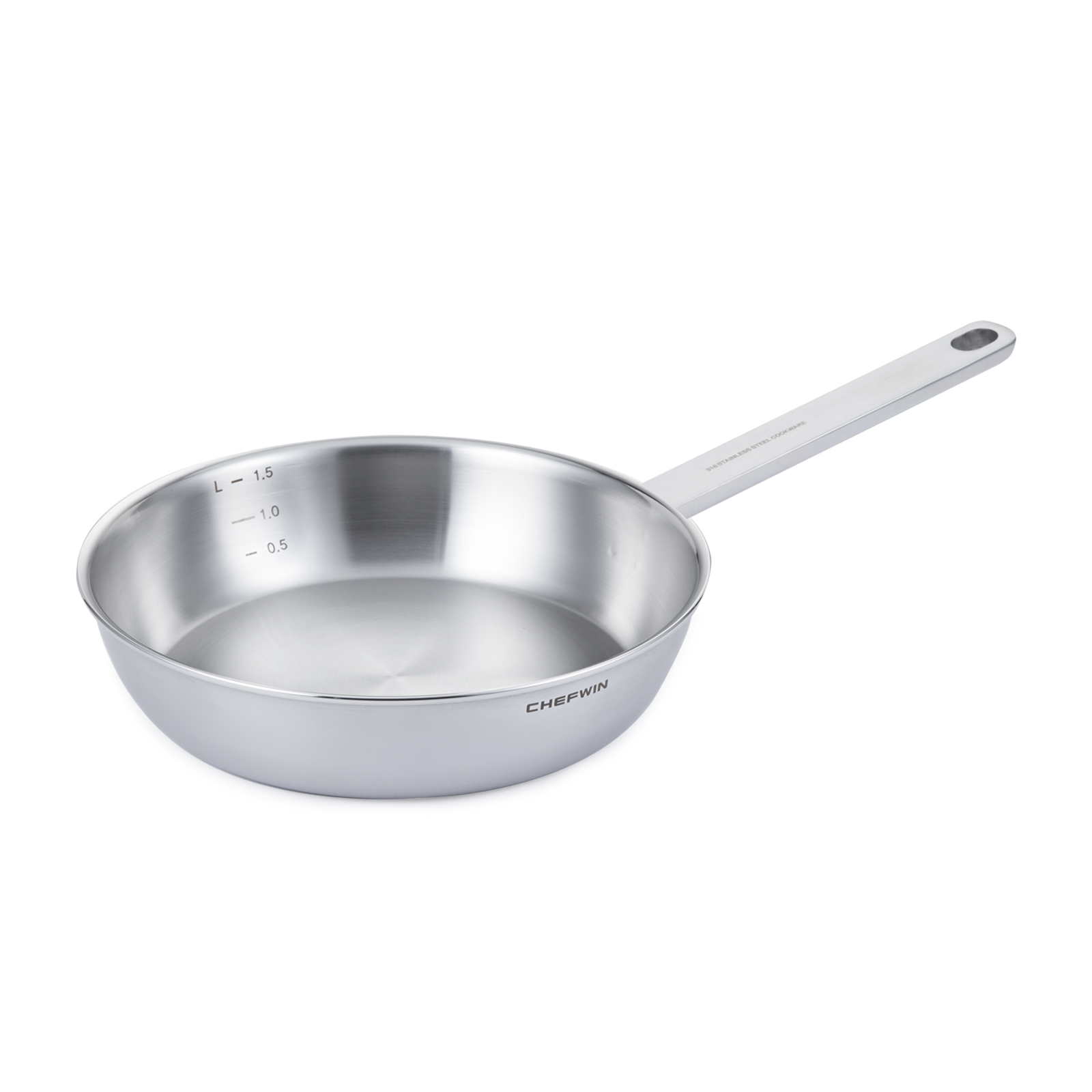
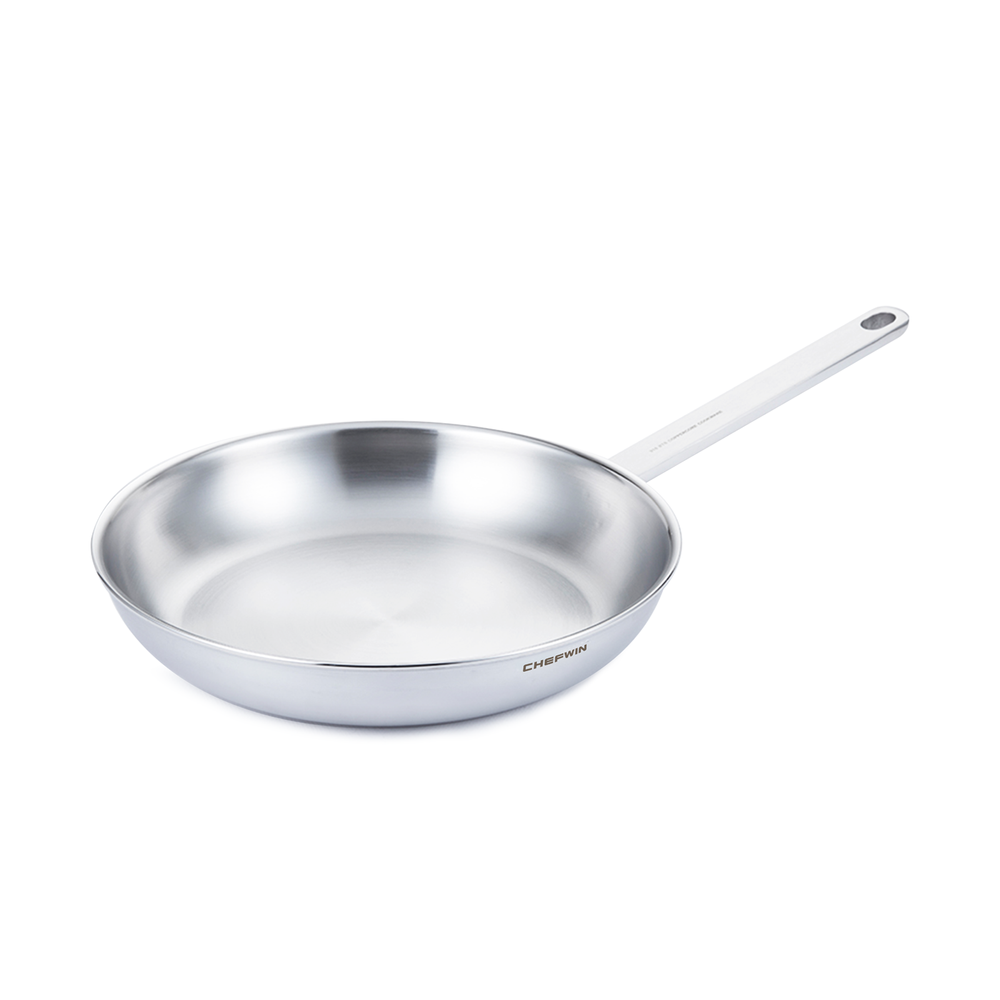
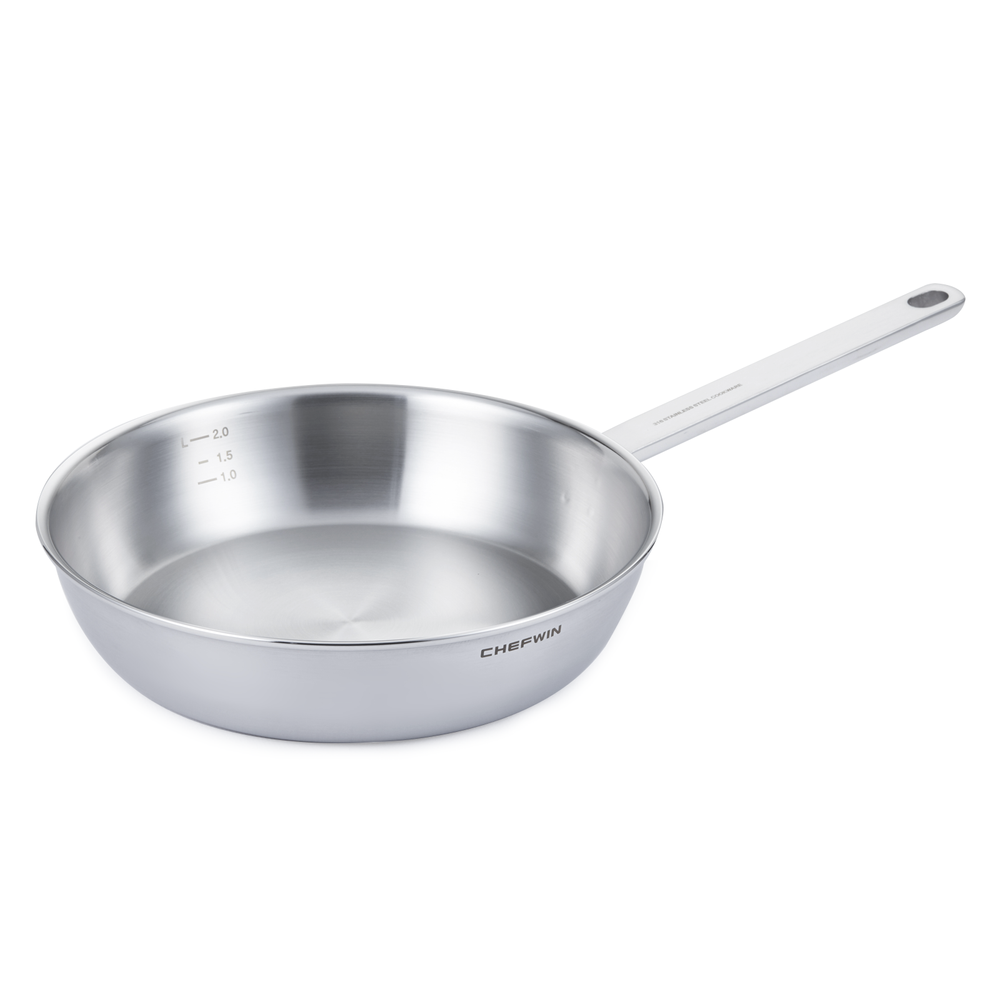
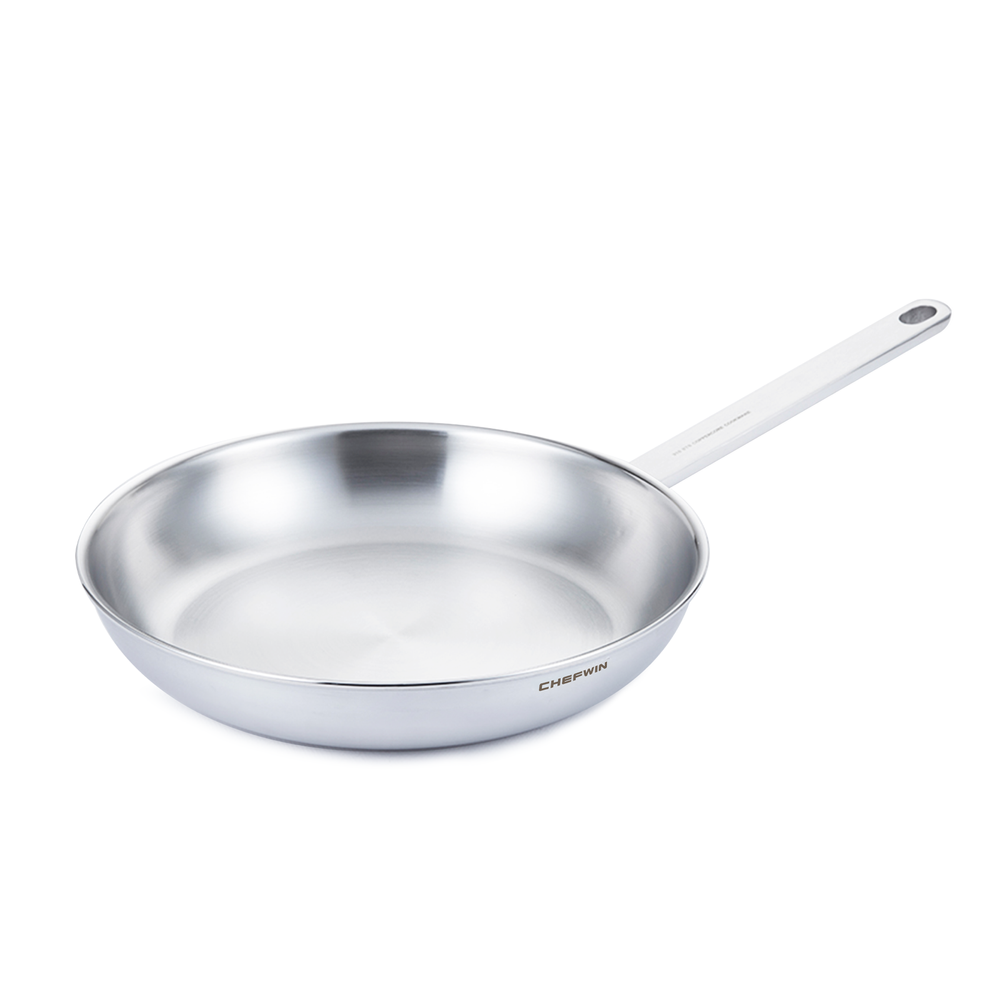
CHEFWIN Premium 316 Stainless Steel 5-Ply Frying Pan (8.6"/22cm)
Key Highlights
Medical-Grade 316 Stainless Steel: Surgical-grade surface with higher corrosion resistance than standard 304 steel. Perfect for salty or acidic foods, ensuring lifetime safety.
Ultimate 5-Ply Body (3.5mm): Extra-thick 3.5mm construction ensures even heat distribution across the entire surface, preventing hot spots and providing the perfect sear.
Versatile Deep Saute Shape: Designed with higher walls to reduce oil splatters and allow easy tossing. Perfect for frying, stir-frying, and sauce-based dishes.
Hygienic Rivetless Design: Sleek, spot-welded interior with no rivets or screws. Prevents food from getting trapped for effortless, hygienic cleaning.
Universal Compatibility: Works perfectly on Induction, Gas, Electric, and Ceramic cooktops. Oven-safe up to 600°F and completely Dishwasher safe.
Technical Specs & Durability
Robust Construction: Engineered with a 3.5mm thickness to resist warping and built to be entirely oven-safe.
Heat Sources: Compatible with Induction, Gas, Electric, and Glass-Ceramic/Halogen cooktops.
Cleaning & Care: Dishwasher-safe for effortless cleanup.
🇰🇷 Modern Korean Cookware
Engineered by a Korean cookware brand focused on durability, functionality, and modern kitchen aesthetics.
