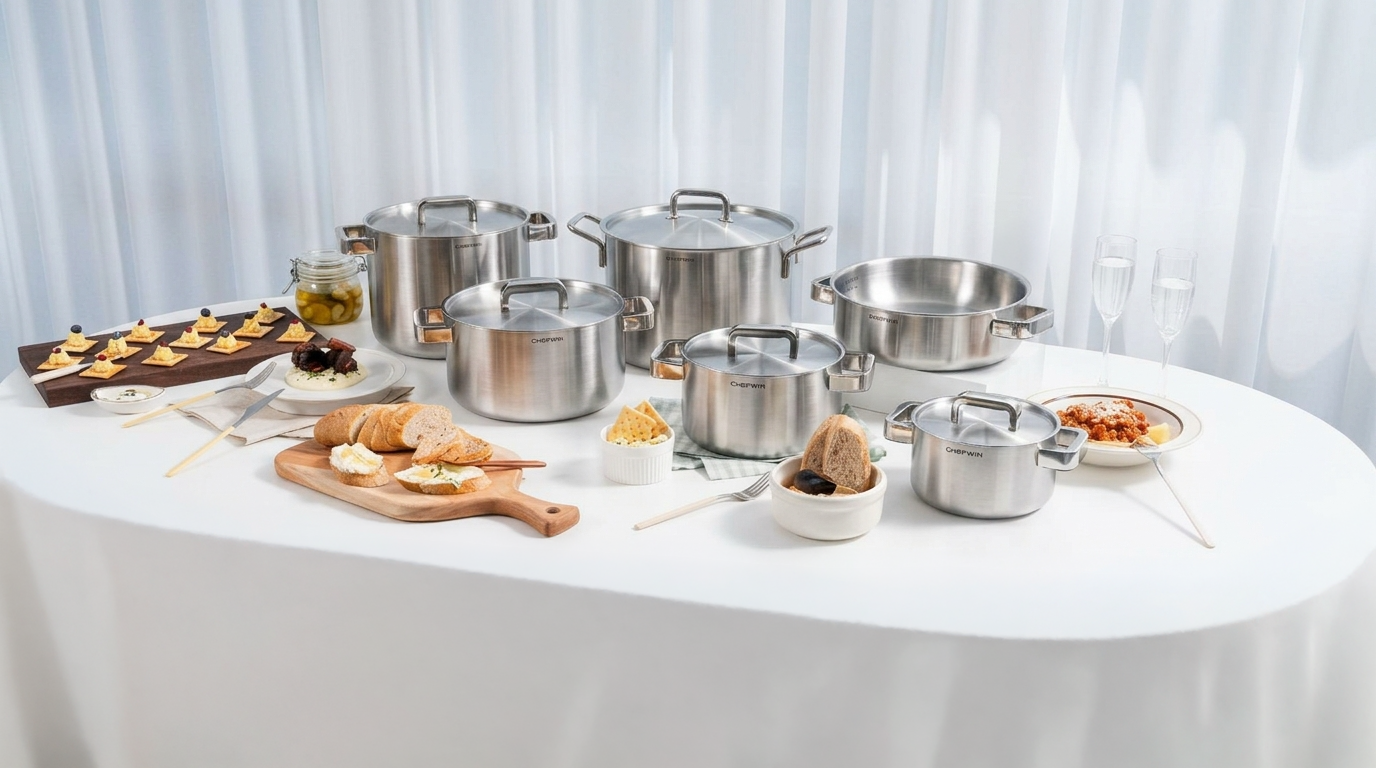
316 Stainless Steel Cookware Benefits
When you are cooking for your family every day, cookware stops being a
simple kitchen tool. It becomes part of how you protect food quality,
manage cleanup, and decide what materials come into contact with every
meal. That is why 316 stainless steel cookware benefits matter so much
especially for home cooks who want a coating-free, long-lasting
option that feels as dependable as it looks.
For many households, the real question is not whether stainless steel
is good. It is whether one grade offers meaningful advantages over
another. In the case of 316 stainless steel, the answer is yes. This
material is often described as medical-grade because it offers stronger
resistance to corrosion and wear than more common stainless steel
options, making it especially appealing for health-focused kitchens.
It is also the foundation behind CHEFWIN's entire cookware line —
built around the belief that healthier cooking starts with safer,
longer-lasting materials.
What makes 316 stainless steel different?
Most people are more familiar with 304 stainless steel, which is
already widely respected in cookware. It is durable, hygienic, and
well suited to everyday cooking. But 316 stainless steel includes
molybdenum, an added element that improves resistance to corrosion,
pitting, and damage from exposure to salt, acids, and moisture.
That difference matters in a real kitchen. If you simmer tomato sauce,
prepare broth, cook soups with salt, or make purees for baby food,
your cookware faces repeated exposure to ingredients that can be
demanding over time. A higher-grade cooking surface helps preserve
both the material and your peace of mind.
This does not mean every piece of cookware needs to be made entirely
from 316 stainless steel to perform well. Construction still matters
just as much. A thoughtfully engineered pan with a 316 cooking surface
and a multi-ply body can offer an ideal balance of safety, heat
control, and long-term durability. This is precisely why CHEFWIN
chose 316 medical-grade stainless steel as the cooking surface for
every piece in its collection.
316 stainless steel cookware benefits for healthier cooking
The strongest reason many people choose 316 stainless steel is simple:
they want a clean, stable cooking surface without synthetic coatings.
That choice feels especially relevant for families trying to reduce
exposure to materials that can scratch, peel, or degrade with high
heat and repeated use.
A coating-free surface you can trust
316 stainless steel provides a naturally non-reactive cooking
environment for most everyday use. You are not relying on a chemical
coating to create performance. Instead, you are cooking on a solid
metal surface designed to maintain its integrity over years of use.
That does come with a learning curve. Stainless steel does not behave
like a slick nonstick pan, so preheating, using enough oil, and controlling heat
are important. But many home cooks find that trade-off worthwhile
because the cooking surface itself is stable, durable, and free from
the worry of peeling finishes.
Better resistance to acidic and salty foods
One of the standout 316 stainless steel cookware benefits is its
improved resistance to corrosion from acidic ingredients and salt-heavy
dishes. This is valuable if your cooking style includes tomato-based
sauces, stews, braises, soups, or frequent boiling.
A more corrosion-resistant interior helps the cookware stay
cleaner-looking and more resilient over time. It also supports a more
hygienic cooking surface, which is especially reassuring when preparing
meals for children, older family members, or anyone with heightened
sensitivity around food quality. This is the kind of everyday
reliability CHEFWIN designs around — cookware that holds up to the
foods real families actually cook.
A hygienic surface with fewer problem areas
Stainless steel is prized for hygiene because it is non-porous and
easier to sanitize thoroughly than many alternative materials. In
premium cookware, this advantage becomes even stronger when combined
with thoughtful design details such as smooth interiors and rivetless
cooking surfaces.
That means fewer tight corners where food residue can build up. For
busy households, easier cleaning is not just a convenience. It is part
of maintaining a healthier kitchen routine day after day.
Performance benefits beyond safety
Health matters, but no cookware earns a permanent place on the stove
unless it also cooks well. This is where people sometimes misunderstand
stainless steel. The steel itself is not the whole story. Heat
performance depends heavily on the full body construction.
Even heat depends on the build
A pan made with premium steel but poor layering can still create hot
spots. By contrast, cookware built with full 5-ply construction
across the entire body is designed to distribute heat more evenly from
base to sidewalls. That can lead to more controlled browning, steadier
simmering, and fewer scorched areas in foods like oatmeal, custards,
sauces, or rice.
For home cooks, this translates into confidence. You are less likely
to fight the pan and more likely to get repeatable results.
Strong searing and better temperature control
Stainless steel is a favorite for searing because it can handle high
temperatures without the limitations associated with delicate coatings.
If you want to brown chicken, develop fond for pan sauces, or stir-fry
at higher heat, 316 stainless steel cookware supports that style of
cooking well when paired with an aluminum or conductive multi-ply core.
The benefit is not just heat tolerance. It is also responsiveness.
Good cookware should feel steady, not erratic, when you adjust the
burner. That kind of control makes everyday cooking more enjoyable
and helps reduce overcooking.
Versatility across the kitchen
Another practical advantage is compatibility. Quality stainless steel
cookware typically works across gas, electric, ceramic, and induction
cooktops, and many pieces can move into the oven as well. That matters
if you want one cookware system that can braise on the stovetop, finish
in the oven, and come to the table looking polished.
For smaller kitchens, versatility is especially valuable. A pot that
can boil pasta, steam vegetables, make stock, and reheat soup earns
its storage space. CHEFWIN takes this idea further with detachable
handles and universal lids, so a complete cookware system fits
comfortably even in compact kitchens.
Why durability changes the value equation
Premium cookware often costs more upfront, so it is fair to ask whether
the difference is worth it. For many households, the answer comes down
to lifespan.
Built for long-term daily use
One of the most practical 316 stainless steel cookware benefits
is that it supports a long service life. Better corrosion resistance
helps the cooking surface withstand years of regular contact with
moisture, salt, and acidic foods. When that surface is paired with
heavy-gauge, multi-ply construction, the cookware is better prepared
for the demands of real family cooking.
This is where premium products separate themselves from disposable
kitchenware. Instead of planning to replace scratched pans every few
years, you invest in cookware designed to stay in your kitchen for the
long haul.
A better fit for busy households
Durability is not only about surviving wear. It is also about staying
functional and attractive through repeated use. Families need cookware
that can handle morning oatmeal, weeknight pasta, weekend stock, and
occasional batch cooking without feeling fragile.
That reliability can save money over time, but it also reduces friction
in daily cooking. You are not second-guessing whether a pot can handle
a longer simmer or whether a surface will be damaged by normal use.
When 316 stainless steel is most worth it
Not every cook needs the highest-grade material in every piece of
cookware. If you cook lightly, rarely use acidic ingredients, or mostly
need an occasional sauté pan, standard high-quality stainless steel may
serve you well. The right choice depends on how often you cook and what
matters most to you.
But 316 becomes especially compelling if you cook daily, prioritize
non-toxic materials, prepare soups and sauces often, or want cookware
that feels like a long-term investment rather than a temporary
solution. It is also a smart fit for parents making baby food or anyone
who places a premium on hygiene and material stability.
Brands that combine a 316 cooking surface with full-body multi-ply
engineering, space-saving features, and easy-clean interior design
bring those benefits into everyday life in a practical way. That is
where premium cookware starts to justify its place, not just as a
better product, but as a better kitchen system.
What to look for besides the steel grade
Steel grade matters, but it should never be the only factor in your
decision. Pay attention to full-body construction, handle design,
induction compatibility, oven safety, and how easy the interior is to
clean. A beautifully marketed material cannot compensate for weak
engineering.
It is also worth considering how the cookware fits your kitchen habits.
Detachable handles, universal lids, and stackable shapes may sound like
small details, but in compact kitchens they make a meaningful
difference. The best cookware supports the way you actually cook and
store your essentials.
This is exactly the broader view CHEFWIN was built around — pairing
316 medical-grade stainless steel with full 5-ply construction,
rivetless interiors, detachable handles, and universal lids, so every
piece works harder for the people who matter most.
Bringing it home
Choosing cookware is ultimately about trust. You want materials that
feel safe, performance that feels steady, and craftsmanship that still
makes sense years from now. When your cookware is built to protect
flavor, support hygiene, and stand up to daily family meals, cooking
starts to feel less like maintenance and more like care.
If you are ready to bring 316 medical-grade stainless steel into your
own kitchen, explore the full CHEFWIN cookware collection — engineered
for healthier cooking, lasting durability, and meals your family will
remember for years to come.