Stainless Steel Cookware for Baby Food
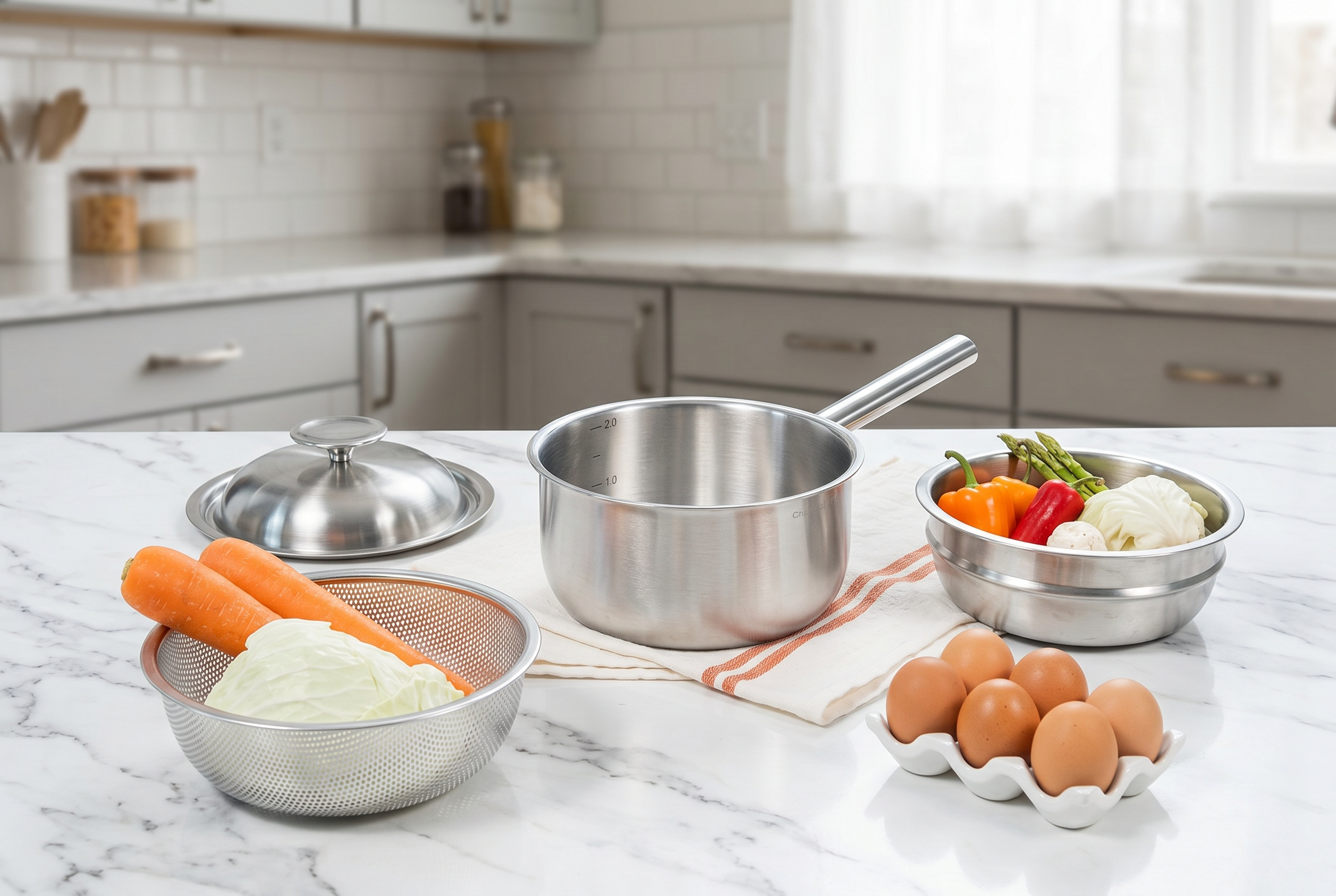
The first few weeks of making purees at home tend to reveal every weakness in your cookware. A pot that scorches apples at the bottom, a pan with chipped coating, or a hard-to-clean interior quickly becomes more than an inconvenience when you are cooking for a baby. That is why many parents start looking closely at stainless steel cookware for baby food - not as a luxury, but as a safer, longer-lasting foundation for everyday meals.
When baby food is part of your regular kitchen routine, the cookware has to do more than heat ingredients. It needs to handle small portions well, clean thoroughly, and hold up to frequent steaming, simmering, blending, and reheating. For families who want coating-free cooking and dependable performance, stainless steel is often the most practical choice.
Why stainless steel cookware for baby food makes sense
Baby food is usually simple, but it is also repetitive. You may steam carrots in the morning, simmer pears in the afternoon, and warm a small portion again at dinner. That repeated use puts a premium on cookware that is hygienic, stable, and easy to maintain.
Stainless steel stands out because it is non-coated and durable. There is no surface layer to peel or wear down over time. That matters to parents who prefer cooking on bare metal rather than relying on synthetic coatings that can degrade with heavy use, high heat, or abrasive cleaning. For baby food, where the goal is straightforward, clean preparation, that simplicity is reassuring.
It also helps that quality stainless steel resists staining, odor retention, and flavor transfer. Mild vegetables, fruits, oats, lentils, and broths can all be prepared in the same pot without the cookware holding onto yesterday's smell or color. When you are making several small batches in a week, that kind of cleanliness is not a small detail.
What to look for in stainless steel cookware for baby food
Not every stainless steel pot performs the same way. The biggest difference is in construction. A thin, lightweight pot may technically be stainless steel, but it can still heat unevenly and create hot spots. For baby food, that means a greater chance of scorching delicate ingredients before they soften properly.
A fully clad or multi-ply body is the better option because it spreads heat more evenly across the base and sides. This gives you more control when cooking soft fruits, grains, or vegetable purees that can stick easily if one area gets too hot. Even heating also makes texture easier to manage, which is especially useful when preparing foods for babies who are just starting solids.
Material quality matters too. High-grade stainless steel offers stronger corrosion resistance and a more durable cooking surface, especially when cookware is exposed to frequent washing, acidic ingredients, and repeated heating cycles. For households that want a cleaner, more durable cooking environment, medical-grade stainless steel can be especially appealing because it supports both hygiene and longevity.
Design details are worth your attention as well. Rivetless interiors are easier to clean thoroughly because there are fewer corners where food residue can collect. A well-fitted lid helps steam vegetables efficiently without unnecessary moisture loss. If your cookware can go from stovetop to oven, it also adds flexibility for gentle finishing or warming.
The best cookware shapes for homemade baby food
You do not need a large collection of specialty pieces to make excellent baby food. In most kitchens, a few well-designed essentials are enough.
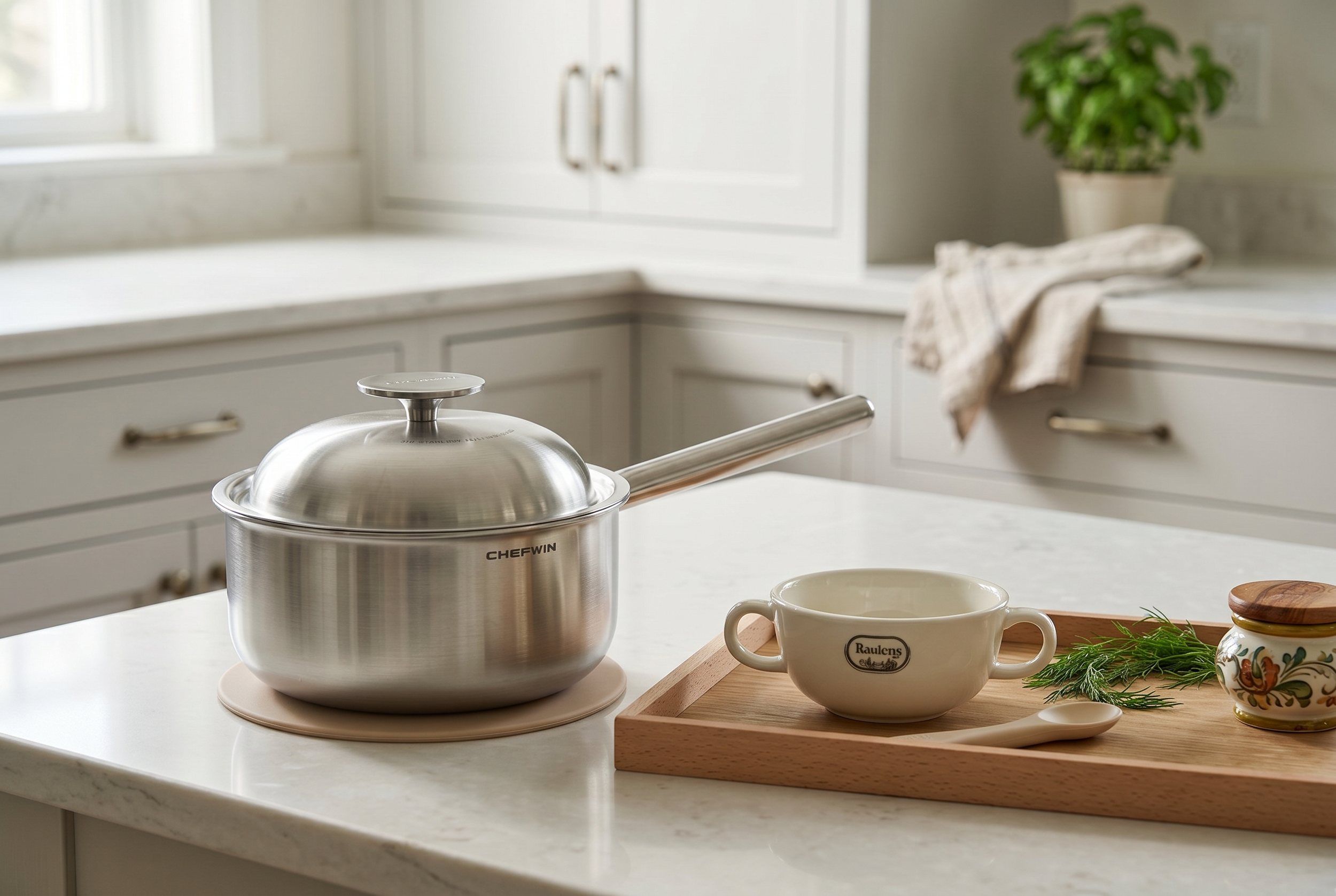
A small saucepan is often the workhorse. It is ideal for simmering apples, poaching pears, warming broth, and cooking oatmeal or soft grains in small portions. The size matters because baby food recipes are rarely large. A pot that is too wide can make tiny batches cook unevenly or reduce too quickly.
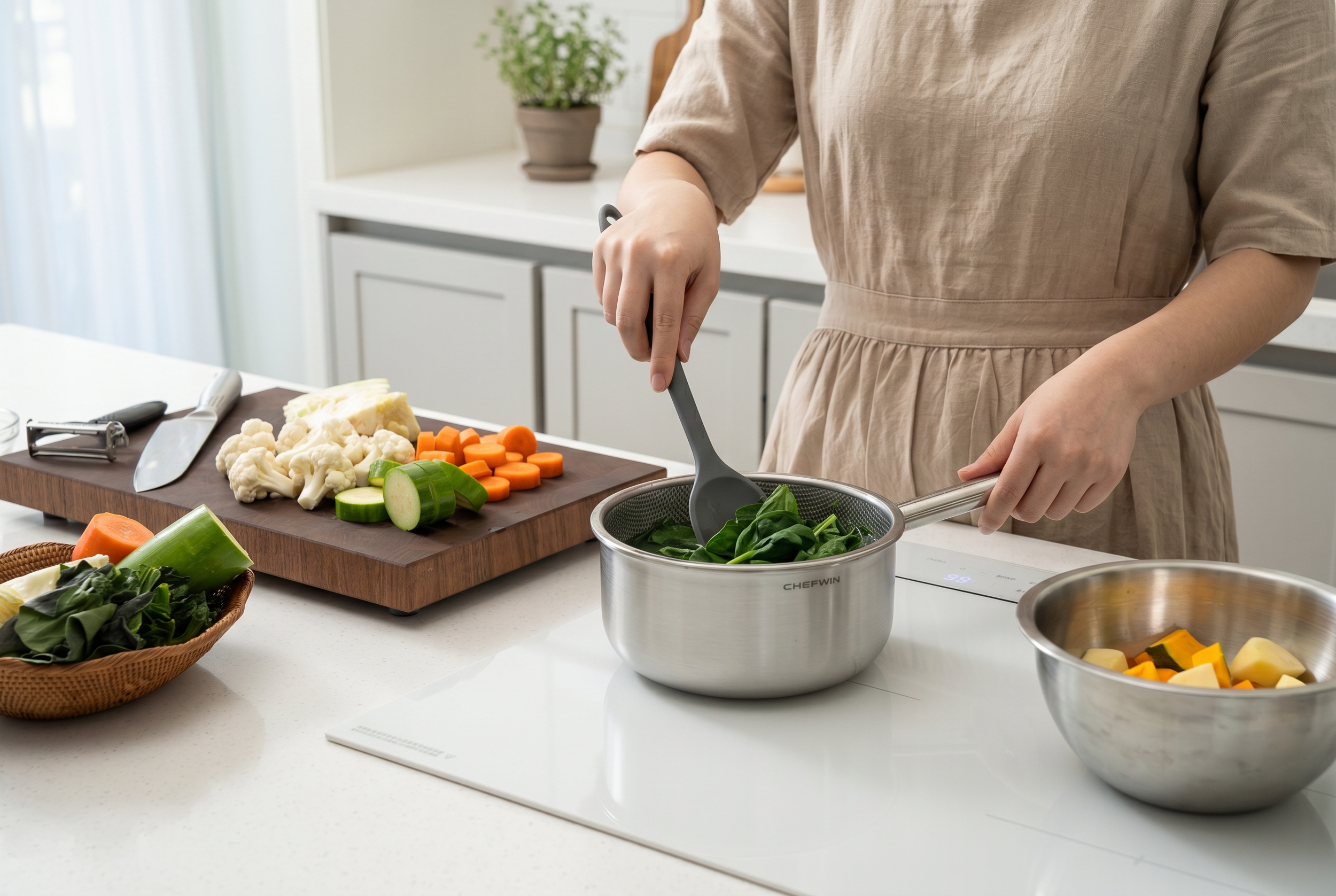
A deeper pot with a steamer insert is also extremely useful. Steaming is one of the gentlest ways to prepare vegetables for purees because it softens the food while preserving texture and natural flavor. Sweet potatoes, zucchini, broccoli, carrots, and squash all respond well to steam cooking. If the pot and steamer are sturdy enough for regular use, they can stay in rotation long after the baby puree stage is over.
A sauté pan or small stockpot can help when baby food overlaps with family cooking. Many parents prefer to prepare one pot of lentils, rice porridge, or vegetable soup and then blend or mash a baby portion before seasoning the rest for adults. That approach saves time and makes stainless steel especially valuable because it transitions easily from baby meals to family meals.
How stainless steel affects cooking results
One reason premium stainless steel earns such loyalty is that it rewards good technique. Once heated properly, it gives you stable control and consistent results. That matters more than many people expect when cooking baby food, because texture is everything.
If pears soften too fast at the bottom of the pot, you can end up with uneven cooking and a puree that feels both watery and grainy. If oats catch on the surface, the flavor changes immediately. A well-built stainless steel pot reduces those problems by holding heat more evenly and responding predictably when you lower the flame.
There is a trade-off, though. Stainless steel is not a completely hands-off material. It usually performs best when you preheat gently, add enough liquid or moisture, and avoid blasting delicate foods on high heat. Parents who are used to nonstick pans may need a short adjustment period. The benefit is that once the technique clicks, you gain a cooking surface that is far more durable and stable over time.
Hygiene, cleaning, and daily convenience
For baby food, easy cleaning is part of food safety. Purees dry quickly, starches cling, and small residues can be surprisingly stubborn if cookware is not cleaned promptly. Stainless steel has an advantage here because it tolerates thorough washing and does not require the same level of surface caution that coated cookware often does.
Smooth interiors are particularly helpful. Without exposed rivets or textured coatings, it is easier to wash out every trace of squash, oatmeal, or mashed beans. If a pot is also dishwasher safe, that adds convenience for busy parents, though many people still prefer hand washing to preserve the cookware's finish.
A common concern is sticking. The answer is not to abandon stainless steel, but to use it correctly. Lower heat, a small amount of water or healthy fat when appropriate, and proper preheating make a noticeable difference. For steaming and simmering baby foods, sticking is usually far less of an issue than it is with high-heat searing.
Is stainless steel better than nonstick for baby food?
It depends on what you value most. Nonstick can feel easier for very quick tasks, especially if you are scrambling eggs or warming sticky grains. But for many parents, the long-term trade-off is not worth it. Coated pans can scratch, wear down, and eventually need replacement. That is not ideal when you are trying to build a safer, more durable kitchen.
Stainless steel asks a bit more from the cook, but it gives more back in lifespan, material confidence, and versatility. It can handle steaming, simmering, boiling, mashing, and reheating without the concern that the cooking surface is a temporary layer. For parents trying to reduce disposable products and invest in cookware built to last a lifetime, that difference is significant.
Choosing cookware that grows with your family
The baby food stage is important, but it is also short. The smartest cookware purchase is one that serves you now and still earns its place years later. A premium stainless steel saucepan does not become obsolete once purees are over. It becomes the pot for oatmeal, sauces, soups, vegetables, grains, and small family meals.
That is where thoughtful engineering matters. Features like 5-ply construction, hygienic interiors, universal lids, and compact storage are not just premium extras. They solve everyday kitchen problems and help cookware stay useful through changing routines. CHEFWIN approaches cookware this way - as a long-term investment in healthier cooking, cleaner materials, and better performance across every stage of family life.
If you are choosing stainless steel cookware for baby food, look beyond the label and focus on how the piece actually works in a real kitchen. Prioritize even heating, quality steel, easy cleaning, and practical sizing. The best piece is not the one marketed only for babies. It is the one that makes tonight's puree simple, tomorrow's soup easier, and your kitchen feel more dependable every time you cook.
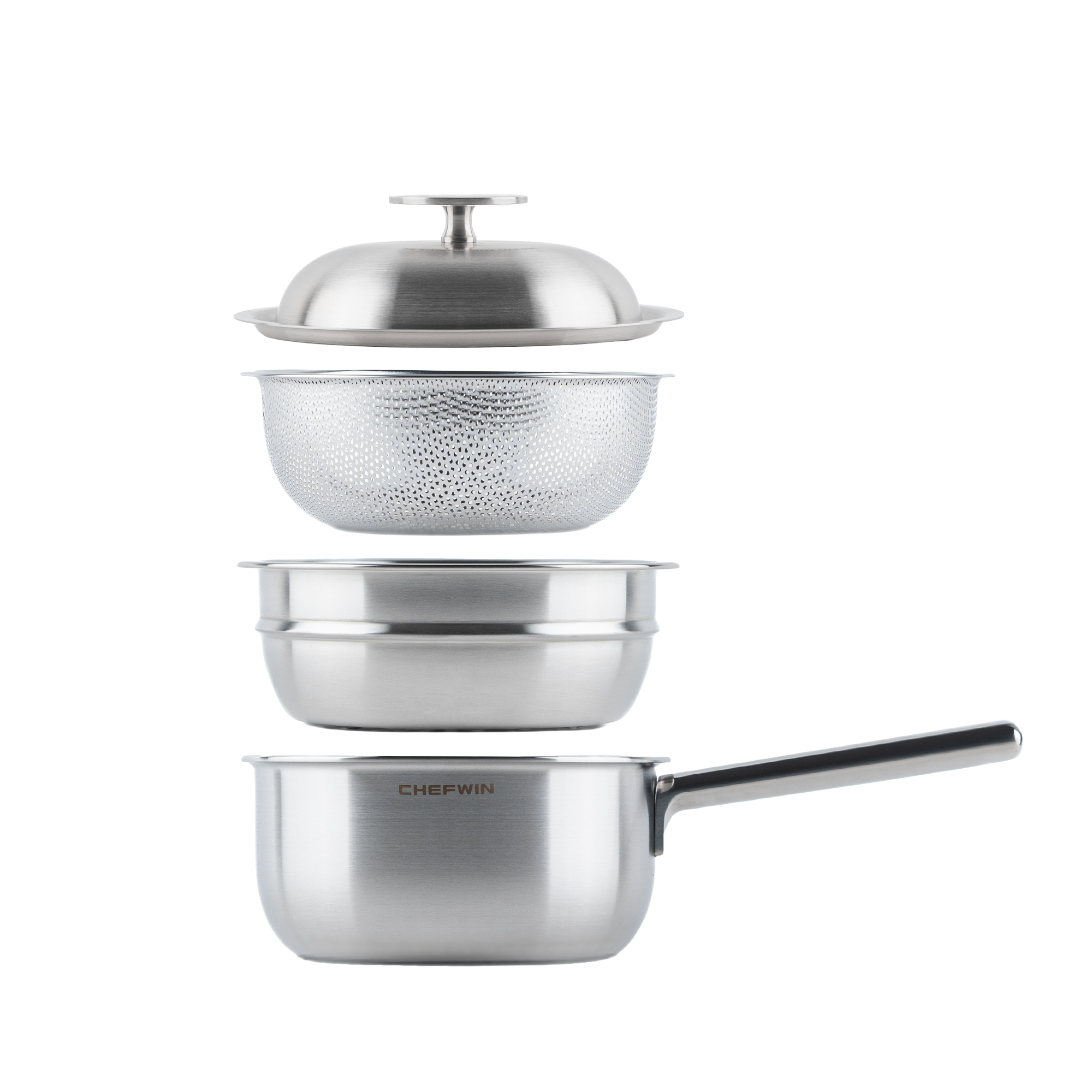
The All-In-One Smart Cooker (18cm / 7-inch)
The Ultimate Kitchen Essential for Healthy, Precision Cooking
Elevate your culinary experience with our Premium 316 Stainless Steel Smart Cooker. Trusted by thousands of parents as the "National Baby Food Pot" in Korea, this versatile 5-in-1 set is designed to handle everything from delicate simmering to high-efficiency steaming.
Key Features
Medical-Grade 316 Stainless Steel: Crafted with premium 316-grade steel, the same material used for surgical instruments. It offers unmatched corrosion resistance against salty or acidic foods, ensuring a lifetime of safe, flavor-pure cooking.
Full 5-Ply Body (2.3mm Thickness): Unlike pots with only a bonded base, our entire body is 5-ply. This "Precision Boiling" technology ensures even heat distribution from the bottom to the rim, eliminating hot spots and preventing food from sticking or burning.
5-in-1 Versatile System: A complete set for every meal. Includes the Main Body, 304 Dome Lid, Steamer, Strainer, and a Detachable Strainer Handle. Perfect for boiling, blanching, steaming, and deep-frying.
Rivetless Hygiene: The interior features a seamless, spot-welded handle design. With no rivets for food to get trapped in, it is incredibly easy to clean and maintains total hygiene for your family.
Smart Design for Daily Use:
Internal Capacity Marks: Precise laser-etched measurements for accurate water ratios.
Multifunctional Dome Lid: The 304 stainless steel lid stands stably when flipped and can even be used as a serving bowl.
All-Heat Source Compatible: Optimized for Induction, Gas, Electric, and Halogen. Dishwasher safe.
🇰🇷 Modern Korean Cookware
Engineered by a Korean cookware brand focused on durability, functionality, and modern kitchen aesthetics.
